New Zealand’s Security Threat Environment

New Zealand's Security Threat Environment 2026

An assessment by the New Zealand Security Intelligence Service.

05. New Zealand’s foreign interference environment

Foreign interference actors are seeking access to New Zealand-based communities, groups, organisations, or politically significant people in order to influence, disrupt, or subvert our national interest.

There are two main forms of foreign interference: political and societal.

  • Political interference includes acts by a foreign state intended to subvert, disrupt or influence governance, democratic institutions, and processes including elections or policy-making.

  • Societal interference is intended to influence or disrupt New Zealand’s communities and non-government sectors.

For activity to be considered foreign interference, it must be deceptive, corruptive, or coercive. Often, the people carrying out this activity are not formally employed by the foreign state. Instead, they are usually coopted to act as state proxies. People can be recruited to willingly carry out a foreign state’s objectives while others may do it unwittingly.

Over the past 12 months, NZSIS has observed states deceptively and coercively engaging with community groups and attempting to suppress social and protest movements.

The PRC continues to be the most active at conducting foreign interference in New Zealand, but there are several other countries doing it as well to varying degrees and scale.

New Zealand’s ethnic communities are frequently the targets of this activity. It is the state actors who are the focus of NZSIS’s attention – communities are the people we are trying to protect.

The Pacific region remains an area of high interest and competition between states seeking to influence countries and communities to support their geopolitical interests.

As this period of global instability continues, we expect foreign interference activity will likely intensify as states become more openly aggressive in pursuing strategic advantage.


Did you know?

NZSIS’s work to help protect elections from national security threats is undertaken in a politically neutral way and in accordance with our obligations under the Intelligence and Security Act. Like the rest of the Public Service, NZSIS staff are also subject to the Public Sector Code of Conduct and the Commissioner’s General Election Guidance.

Political interference in New Zealand

NZSIS has seen foreign interference activity targeting politicians, candidates and politically influential people. Efforts to build influence are expected to continue, including throughout the upcoming election period in late 2026, but are unlikely to impact the election results.

Foreign interference actors will likely exploit the accessibility of political candidates while they are out campaigning to build relationships.

Individuals who are close to candidates, such as their community contacts, advisors and staffers, can also be targeted due to their access and perceived influence. Some foreign states will highly likely use any opportunity in front of a candidate to portray diaspora communities as politically homogenous and aligned with the state’s interests. Their plan is to leverage the communities’ political power to gain influence. In some cases, candidates will think they are engaging with representatives or spokespeople for diaspora communities, when in fact it could be a foreign state actor.

Co-optees, disguising their foreign state links, might also use donations, gifts and hospitality to build a relationship with a candidate that could be later leveraged, sometimes years later. Such efforts are often ongoing and also happen outside of election periods.

NZSIS monitors national security threats associated with general and local elections along with providing protective security advice to political parties, candidates and election administrators. We remain alert to any foreign interference threats that seek to undermine New Zealand’s free and fair democratic processes.

Be vigilant to foreign interference

Political candidates should not be deterred from attending events or engaging with diverse communities in New Zealand.

Candidates, party officials and advisors, or volunteers can protect themselves against foreign interference efforts by being vigilant about persistent approaches, checking any links to a foreign government and by understanding the background to any donation, gift or event they are invited to attend.

Read our advice at:

Espionage and Foreign Interference Threats [PDF, 2.7 MB] | protectivesecurity.govt.nz

Societal interference in New Zealand

Transnational Repression

Diaspora community groups in New Zealand are being unfairly targeted by foreign states and their proxies seeking to limit the democratic rights and freedoms they enjoy as New Zealanders.

States are increasingly using the threat of legal and administrative action, also called “lawfare”, to influence people’s behaviour. This is a type of transnational repression (TNR) and is part of a range of behaviours and activities we see affecting communities in New Zealand including foreign state-directed surveillance and harassment of their family members overseas.

Lawfare has been a consistent theme in recent months where we have seen the threat of consular services being refused, and passports and visas withheld.

People have been prevented from travelling to their country of origin and accessing bank accounts or property unless they moderate their perceived behaviour to align with the state’s preference. NZSIS is aware of several states threatening to “blacklist” people in New Zealand unless they stop advocating for a particular protest or political movement.

Such threats are unacceptable in New Zealand and all diaspora communities should be aware that they do not have to tolerate any restriction on their democratic rights and freedoms.

Why we use the term “diaspora”: We are referring to a group of people with cultural, ancestral or familial ties to another state. Being a member of a diaspora community does not take away from someone’s identity as a New Zealander, but some foreign states view this differently.



Did you know?

Changes to the Crimes Act in November 2025 created criminal offences to address foreign interference activity in New Zealand. It’s now illegal to undertake improper conduct for or on behalf of a foreign state in a way that compromises New Zealand’s interests.


Gatekeeping

New Zealanders enjoy uncensored access to media and can read a diversity of perspectives. There are foreign states, however, that try to prevent diaspora populations from experiencing the same rights and privileges.

We continue to observe some foreign states seeking to exert control over what information communities have access to in non-English media outlets. Attempts are made to manipulate information, including by portraying the New Zealand Government as supportive of the foreign state’s narratives, even if no such statements have been made.

Community leaders are also leaned on to ensure diaspora communities in New Zealand hear the approved messages. Such behaviour is an example of gatekeeping where a co-opted group or individual places themselves as a go-between for a particular community to control the flow of information.

Foreign states facilitating these activities are trying to act as gatekeepers over the information communities are allowed to see, while at the same time trying to disguise the role they played. Such coercive and controlling behaviour is foreign interference and is designed to crowd out or silence perceived dissidents.

Case study

A foreign state official encouraged a community leader to lobby New Zealand authorities to prevent an organised protest event from occurring. The foreign state representative almost certainly intended this petitioning to appear as genuine community sentiment, and for it to support official lobbying efforts at the diplomatic level.

Unwitting support for societal interference

Attending community events is part of the job for many central or local government representatives or officials in New Zealand. These engagements contribute to the richness of our society. They ensure diverse voices are heard and have the ability to inform policy decisions in their own communities. In some cases, however, these events are being exploited by foreign state actors to send a message to perceived dissidents within diaspora communities.

Foreign states routinely use events like these to choreograph photo opportunities with officials to portray some kind of ideological support with the state’s objectives. A New Zealand politician or official posing for the picture would expect the photo is simply to record the occasion. But sometimes the attached narrative, or just the existence of the photo when it is published, will add legitimacy to efforts to denigrate, or further marginalise, a perceived dissident group.

The community members on the receiving end of such activity are made to feel isolated by the portrayal of familiarity with someone they see as representing their oppressor. They may lose faith in public institutions or lose their sense of belonging in New Zealand as a result.

Politicians or officials should not be deterred from participating in event photos as engagement with diverse communities is important, but it is reasonable to ask how that photo might be used and to ask for approval before its published.

Case study

NZSIS continues to see a particular foreign state’s diplomatic mission pressuring local government representatives and community groups to exclude perceived dissidents from events. Such requests are happening around the country. Event organisers are persuaded that the inclusion of people who are offside with the foreign state will cause diplomatic ructions and upset the community. The foreign state representatives will hide their real intentions, which are to exert control over who they consider to be dissidents and suppress these views from reaching the wider community. Foreign states have no legal remit to exert such control over communities in New Zealand, and any such actions are inconsistent with our democratic values.

Manage inward visits

Organisations should not feel compelled to accept foreign delegations when there are no obvious benefits from the visit.

The Managing Inwards Visits guidance provides a framework for considering both the opportunities and security risks brought by foreign delegations.

Seek clarity about the purpose of the visit and consider any reputational costs that might arise from hosting.

Make sure hosting delegations are in your interests. Read the guidance at:

Managing inward visits [PDF, 2.7 MB] | protectivesecurity.govt.nz

Did you know?

We see instances of pressure placed on organisations and communities about events on topics a foreign state would prefer not be discussed. These requests can become heated and result in threats of economic coercion. Foreign states do not get to dictate such matters in a democratic society. The Ministry of Foreign Affairs and Trade can provide advice to support organisations with these relationships.


Advice for communities

NZSIS is keen to hear when communities have experienced any of the behaviours and activities described in this section of the report.

Members of ethnic communities will likely see concerning activity before the NZSIS. Letting us know helps us to understand how common foreign interference is in New Zealand and gives us more options to work with partners across government to disrupt and call it out.

Information is treated in confidence. Community members may think their experience or information is insignificant, but it could help us to solve a wider intelligence puzzle.

Foreign interference harms New Zealand’s national security and attacks our democracy. Let us know in the language of your choice by clicking on “report a national security concern” on the NZSIS website.


Community Resilience to Foreign Interference Hub

Ethnic communities in New Zealand do not have to tolerate foreign interference.

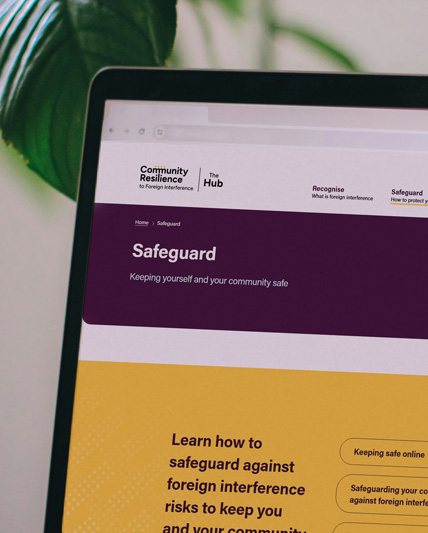
The Ministry for Ethnic Communities has launched the Community Resilience to Foreign Interference Hub, an online platform providing information, practical tools and resources for communities.

Developed with communities in mind and informed by their experiences, the Hub reflects a growing recognition that ethnic communities are not simply affected by foreign interference, they can also play a key role in strengthening New Zealand’s resilience.

The Hub is designed to be an enduring platform for building community resilience. It will evolve to meet community needs and the changing nature of foreign interference.

Resources are available in 31 languages at www.crfi.govt.nz(external link).

25 Kiwi wires